Paper vs plastic push-up tubes
Sustainability, filling-line behavior, consumer perception, and cost: an honest comparison of paper and plastic push-up tubes for deodorant, balm, and solid cosmetics.
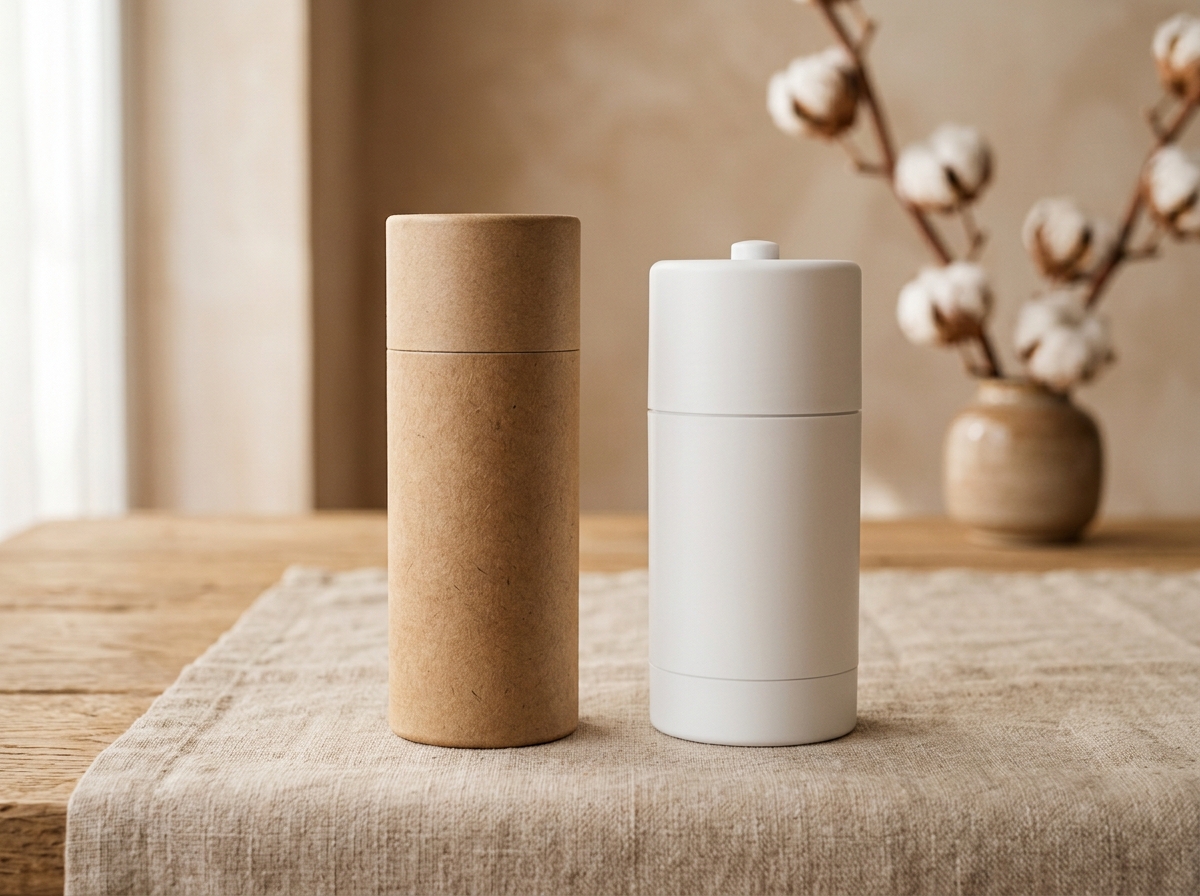
Recyclability: kraft paper push-up tubes go in the curbside bin nearly everywhere; plastic deodorant components mostly do not (mixed resins, sizes below sorter thresholds). If the brand promise is low-waste, paper keeps it without an asterisk.
On the filling line: paper tubes fill warm or cold-pour like plastic but want correct fill temperature discipline (very hot pours can stress wax-lined interiors) and consistent push-disc fit — which is a manufacturing tolerance question. That is why you sample first: our kits exist so your line can vote.
Consumer feel: paper reads honest, tactile, premium-craft; plastic reads conventional. For DTC and retail-shelf natural brands, the package is the positioning.
Cost truth: imported paper tubes can undercut US-made on unit price, then give it back in 10k-unit MOQs, ocean lead times, and duty surprises. US-wound tubes from Raymond ship in weeks, at minimums from $1,000, wound from 100% recycled paper.
// RELATED: push-up paper tubes · sustainable & recycled · consumer brands & makers
Spec it today. Tubes this week.
FAQ
Are paper push-up tubes really recyclable?
Yes — kraft paper tubes are curbside-recyclable in most municipal streams, unlike most small-format plastic deodorant components.
Do paper tubes work with standard filling equipment?
Generally yes, with attention to fill temperature and disc fit — request a free sample kit and prove it on your own line.
What liners are available for direct skin contact products?
Food-safe liner options are available; tell us the formulation and we will spec the interior.